 themes : NARRATIVE FIGURATION themes : NARRATIVE FIGURATION |
 |
Valerio ADAMI (Italy, Bologna 1935)
Eduardo ARROYO (Spain, Madrid 1937-2018)
René BERTHOLO (Portugal, Alhandra 1935-2005)
ERRÓ (Gudmundur Gudmunson: Iceland, Ólafsvík 1932)
Gérard FROMANGER (France, Pontchartrain 1939 - Paris 2021)
Peter KLASEN (Germany, Lübeck 1935 - Lives and works in France since 1959)
Jacques MONORY (France, Paris 1924-2018)
Bernard RANCILLAC (France, Paris 1931 - Malakoff 2021)
Hervé TÉLÉMAQUE (Haiti, Port-au-Prince 1937 - Lives and works in Paris since 1961)
Vladimir VELICKOVIC (Yugoslavia, Belgrade 1935 - Croatia, Split 2019)
Jan VOSS (Germany, Hamburg 1936 - Lives and works in Paris)
etc...
|
|
| |
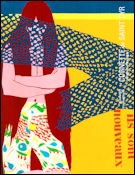
[FIGURATION NARRATIVE]
La Figuration Narrative
Paris, Cornette de Saint Cyr, 2015. |
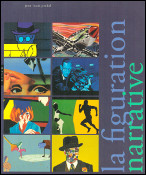
[COLLECTIF]
La Figuration Narrative
Paris, Editions Hazan, 2008. |
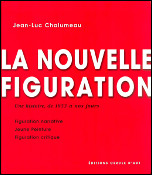
[FIGURATION]
La nouvelle figuration
Paris, Editions Cercle d'Art, 2003. |
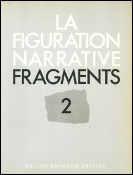
[COLLECTIF]
La Figuration Narrative
Paris, Galerie Raymond Dreyfus, 1990. |
|
| |
|
|
|
| |
|


Emerging in France in the early 1960s, NARRATIVE FIGURATION was born as a reaction to the hegemony of abstraction and the observed rise of American Pop Art. This movement was not defined by a single style, but by a shared desire to reintroduce everyday social and political reality into painting. Unlike American artists who isolated consumer objects, painters of NARRATIVE FIGURATION used images to tell a story, denounce injustices, or analyze the mechanisms of power, often drawing on pre-existing imagery from photography or cinema.
The foundational text of the movement is linked to the collective exhibition "Everyday Mythologies," organized in 1964 at the Musée d'Art Moderne de la Ville de Paris by art critic Gérald Gassiot-Talabot and artists Bernard RANCILLAC and Hervé TÉLÉMAQUE. This event brought together major figures such as Valerio ADAMI, Eduardo ARROYO, Jacques MONORY, and ERRÓ. Together, they hijacked the codes of comic strips, advertising, and film noir to create fragmented compositions, playing with montage and temporality to challenge the viewer regarding their saturated visual environment.
The movement was part of a deeply political approach, particularly during the events of May '68, when artists actively engaged in the Atelier Populaire des Beaux-Arts to produce militant posters. In 1977, the exhibition "Everyday Mythologies 2" attempted to review this decade of protest through images. Artworks from this period are characterized by flat areas of bright colors, black outlines, and a frequently cinematic staging, exploring themes ranging from the Vietnam War to the critique of consumer society.
The historical recognition of NARRATIVE FIGURATION consolidated over time, culminating in a major retrospective at the Galeries nationales du Grand Palais in 2008. This exhibition allowed for a re-evaluation of the movement's importance as an essential bridge between classical art and contemporary visual cultures. Today, the works of MONORY or RANCILLAC are considered crucial testimonies to the intellectual vitality of the Parisian scene of the 1960s and 1970s, offering a critical and engaged alternative to the purely commercial aesthetic of Pop Art.
Several collective exhibitions have played the role of a manifesto or institutional recognition, among which the following marked the movement's evolution:
- « Everyday Mythologies » (July 1964 – Musée d’Art moderne de la Ville de Paris)
This is the foundational exhibition and the true manifesto of the movement. Organized by art critic Gérald Gassiot-Talabot and artists Bernard RANCILLAC and Hervé TÉLÉMAQUE, it brought together 34 artists (including Eduardo ARROYO, ERRÓ, Jacques MONORY, Peter KLASEN). It highlighted works inspired by consumer society, comic strips, advertising, and cinema, placing narrative and politics at the heart of new figurative painting.
- « Narrative Figuration in Contemporary Art » (1965 – Galerie Creuze, Paris)
It was during this exhibition, also orchestrated by Gérald Gassiot-Talabot, that the term "NARRATIVE FIGURATION" was officially used for the first time to name and group these artists. The event formalized the theoretical codes of the movement: the use of time, sequential layout (close to comic strips), and the hijacking of media images.
- « The World in Question » (1967 – Musée d’Art moderne de la Ville de Paris)
This exhibition marked the movement's increasingly political and protest-oriented turn as the events of May '68 approached. Artists directly addressed the burning issues of the time: the Vietnam War, the Cold War, the manipulation of the masses by media, and the critique of capitalism. Painting became a weapon of social engagement.
- « Everyday Mythologies 2 » (1977 – Musée d’Art moderne de la Ville de Paris)
Thirteen years after the original exhibition, this sequel reviewed the movement. It provided a way to measure the aesthetic evolution of the historical artists and integrate a new generation of painters who continued to question images, politics, and visual narration, proving that the movement had established a lasting presence in the French artistic landscape.
- « Narrative Figuration. Paris, 1960-1972 » (2008 – Galeries nationales du Grand Palais, Paris)
This is the grand retrospective of institutional recognition. Co-produced with the Centre Pompidou, this historic exhibition allowed the public to rediscover the scope and visual richness of the movement, repositioning NARRATIVE FIGURATION as one of the major European avant-gardes of the second half of the 20th century in the face of the hegemony of American art.