 themes : FIGURATION LIBRE themes : FIGURATION LIBRE
|
 |
Rémi BLANCHARD (France, Nantes 1958 - Paris 1993)
François BOISROND (France, Boulogne-Billancourt 1959)
Robert COMBAS (France, Lyon 1957)
Hervé Di ROSA (France, Sète 1959)
Richard Di ROSA (Buddy: France, Sète 1963) |
|
| |
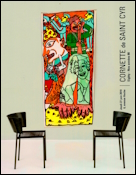
[FIGURATION LIBRE].
Eighty | Nos années 80
Paris, Cornette de Saint Cyr, 2019. |
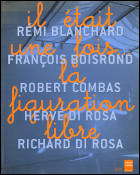
[FIGURATION LIBRE].
Il était une fois la figuration libre
Paris, Adam Biro, 2001. |

[FIGURATION LIBRE].
Paris - New-York
Paris, Editions Au Même Titre, 1999. |
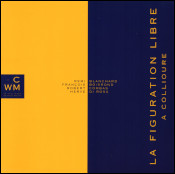
[FIGURATION LIBRE].
La Figuration Libre à Collioure
Collioure, Le CWM, 1997. |
|
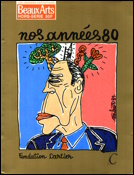
[FIGURATION LIBRE]
Nos années 80
Paris, Fondation Cartier, 1989. |
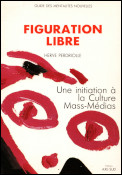
[FIGURATION LIBRE]
Une initiation à la Culture Mass-Média
Paris, Editions Axe-Sud, (1984). |

[FIGURATION LIBRE]
FRANCE-USA
Paris, ARC / MAM, 1984. |
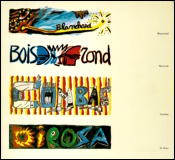
[FIGURATION LIBRE]
BLANCHARD BOISROND COMBAS ...
Groninguer Museum, 1983. |
|

[FIGURATION LIBRE]
New French Painting
Oxford, Museum of Modern Art, 1983. |
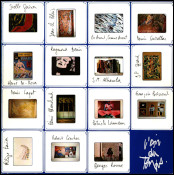
[FIGURATION LIBRE]
L'Air du Temps
Nice, Galerie d'Art Contemporain, 1982. |
|
| |
|
|
|
| |
|
To discover, or browse through again, the essential blog by Hervé Perdriolle about Figuration Libre
A graphic designer by training, Hervé Perdriolle, in connection with Bernard Lamarche-Vadel, accompanied and supported the first steps of the movement, which he recounts in a manifesto book published as a supplement to the catalogue of the exhibition "5/5 Figuration Libre, France/USA", organized by Otto Hahn and himself at the ARC, Musée d'Art Moderne de la Ville de Paris, in 1984/85. |
|
Figuration Libre.
Ben Vautier's interview by Andy Warhol.
[...] The painters of Figuration Libre, by painting the way they do, claim something completely different from the old figurative painters. They claim the freedom to be themselves, bad, vulgar, not to fit into the linear path of novelty, not to worry about either DUCHAMP or MATISSE but, while being fully aware of the situation, to offer their own "self". Figuration Libre is a painting that fits into the humanist current of the search for identity; it is a rejection of the notion of cosmopolitanism. [...]
Excerpt from the text by Ben Vautier for the catalogue of the exhibition L'air du Temps. Figuration Libre en France. presented in February-April 1982 at the Galerie d'art contemporain des Musée de Nice |
|
Figuration Libre, a break from Conceptual Art...
The history of these painters resisting oblivion today begins at the very start of the 80s with an exhibition by BEN, a key figure of the Fluxus movement, who organized an exhibition in Nice in 1981 considered the primal scene of Figuration Libre, 2 Sétois à Nice, Ben expose Robert Combas et Hervé Di Rosa. The term "figuration libre" was coined by art critic Bernard Lamarche-Vadel, who alongside BEN, brought these artists to the forefront with another 1981 exhibition in his Paris loft, Finir en beauté. Based on another idea by Ben, Marc Sanchez organized the 1982 exhibition L'Air du Temps, Figuration libre en France at the Galerie d'art contemporain de Nice. COMBAS then began exhibiting at Yvon Lambert, and Hervé Di ROSA at the Gillepsie-Laage-Salomon gallery: their careers were fully underway.
In addition to Robert COMBAS and Hervé DI ROSA, the movement was then composed of young people like Rémi BLANCHARD, François BOISROND, Louis JAMMES, Loïc Le GROUMELLEC, Jean-Charles BLAIS... A real crew of the 1980s, as if the decade mostly came down, in the aesthetic field, to its antics, breaking with an established tradition of conceptual art.
The gallery owner Yvon Lambert, close to the 1970s art scene, visited Lamarche-Vadel's exhibition in 1981 and was delighted to discover the canvases of Robert COMBAS. He immediately sensed the new wind blowing through the French art scene, echoing what was happening elsewhere: a figurative and colorful style of painting was taking over, as a (distant) echo to the Neo-Expressionists and the New Fauves in Germany (Georg BASELITZ, Anselm KIEFER...), to Trans Avant-Garde in Italy (Francesco CLEMENTE, Mimo PALADINO...), and to Bad Painting in the United States.
Accompanying its time
Contemporaries of Keith HARING, Jean-Michel BASQUIAT, Julian SCHNABEL, Kenny SCHARF..., the French painters drew inspiration at the beginning of the 1980s from street culture and popular forms of visual art (comics, graffiti) or music (post-punk). This new generation of casual and uninhibited painters thus stood apart from the dominant codes of conceptual and minimal art of the 1970s.
Excerpt from the text by Jean-Marie Durand for Les Inrockuptibles (12/19/16) |
| |
|


The FIGURATION LIBRE movement officially took shape at the very beginning of the 1980s, in reaction to the austerity of conceptual and minimalist art from previous decades. It was in 1981 that the artist BEN gave the group its name, officializing a spontaneous, joyful, and casual aesthetic. This new generation of artists claimed a return to figurative painting without academic rules, appropriating the codes of the street, advertising, and subculture with total freedom and a frequently provocative sense of humor.
The leading figures of this movement quickly shook up the French artistic landscape. Artists like Robert COMBAS, considered the leader of the movement, and Rémi BLANCHARD imposed a strong graphic style, marked by thick black outlines and saturated colors. They were soon joined by François BOISROND and Hervé DI ROSA, who infused their works with the imagery of comic books, cartoons, and popular toys. Together, they saturated their canvases with monsters, whimsical characters, and frenetic scenes of daily life.
The year 1984 marked a major international turning point for the group thanks to the landmark exhibition "5/5: Figuration Libre, France/USA" organized at the Musée d'art moderne de la Ville de Paris. This historic event built a decisive cultural bridge by confronting the creations of French painters with those of the New York graffiti scene and East Village, driven by icons of the same generation such as Keith HARING or Jean-Michel BASQUIAT, thus sealing the global impact of this new figuration.
Although the group's original collective effervescence faded towards the end of the 1980s, the legacy of FIGURATION LIBRE remains immense in the history of contemporary art. By unsanctifying "grand painting" and opening museum doors to pop culture, Robert COMBAS, Hervé DI ROSA, and their peers paved the way for the rise of today's street art and urban art, proving that serious art could also be deeply accessible and uninhibited.
A few key exhibitions that mark the history of the group:
- "Finir en beauté" (June 1981, Paris)
Organized by art critic Bernard Lamarche-Vadel in his own Paris loft, this exhibition is considered the true starting point. It brought together Robert COMBAS, Hervé DI ROSA, Rémi BLANCHARD, and François BOISROND for the first time, marking the birth of the group.
- "L'Air du Temps: Figuration Libre en France" (1982, Galerie d'art contemporain de Nice)
Orchestrated at the initiative of Ben VAUTIER, this exhibition officialized and popularized the name of the movement among the public and institutions.
- "Statements New York 82" (1982, Holly Solomon Gallery, New York)
Organized by Otto Hahn, this exhibition marked the first major presentation of the four French artists in the United States, sparking their decisive encounter with the East Village art scene.
- "5/5: Figuration Libre, France/USA" (December 1984 – February 1985, Musée d’art moderne de la Ville de Paris)
This was the pinnacle of the collective adventure. The exhibition directly confronted the French group (Robert COMBAS, Hervé DI ROSA, Rémi BLANCHARD, François BOISROND) with the finest of American graffiti and pop art: Keith HARING, Jean-Michel BASQUIAT, Kenny SCHARF, and CRASH.
The Paris Biennale (1985)
The movement held a central position there, affirming its essential status in the global art news of the mid-1980s.
- "Les Années 80: l’exposition" (2002, Centre Pompidou, Paris)
A major historical review that consecrated Figuration Libre as the leading pictorial movement of that decade in France.
- "Figuration Libre, historique d’une aventure" (2015, Musée Paul Valéry, Sète)
Since Sète is the birthplace of Robert COMBAS and Hervé DI ROSA, this exhibition accurately traced the close links, emulation, and raw energy that united the French quartet and their American counterparts in the early 80s.