

|
|||
 |
|||
| >>> complete series available <<< | |||
|
|||
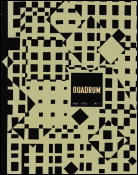 [COLLECTIVE]. Quadrum No. 1. Brussels, A.D.A.C., 1956. |
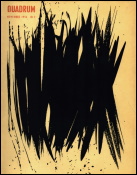 [COLLECTIVE]. Quadrum No. 2. Brussels, A.D.A.C., 1956. |
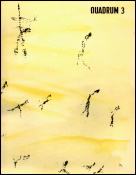 [COLLECTIVE]. Quadrum No. 3. Brussels, A.D.A.C., 1957. |
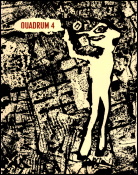 [COLLECTIVE]. Quadrum No. 4. Brussels, A.D.A.C., 1957. |
|
|||
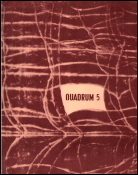 [COLLECTIVE]. Quadrum No. 5. Brussels, A.D.A.C., 1958. |
 [COLLECTIVE]. Quadrum No. 6. Brussels, A.D.A.C., 1959. |
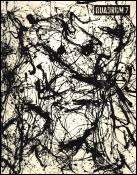 [COLLECTIVE]. Quadrum No. 7. Brussels, A.D.A.C., 1959. |
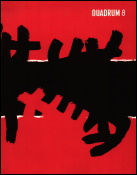 [COLLECTIVE]. Quadrum No. 8. Brussels, A.D.A.C., 1960. |
|
|||
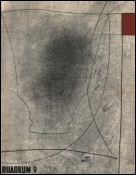 [COLLECTIVE]. Quadrum No. 9. Brussels, A.D.A.C., 1960. |
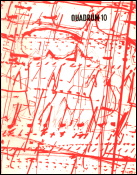 [COLLECTIVE]. Quadrum No. 10. Brussels, A.D.A.C., 1961. |
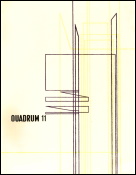 [COLLECTIVE]. Quadrum No. 11. Brussels, A.D.A.C., 1961. |
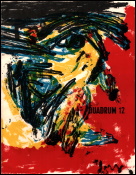 [COLLECTIVE]. Quadrum No. 12. Brussels, A.D.A.C., 1961. |
|
|||
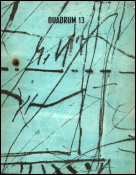 [COLLECTIVE]. Quadrum No. 13. Brussels, A.D.A.C., 1962. |
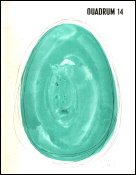 [COLLECTIVE]. Quadrum No. 14. Brussels, A.D.A.C., 1963. |
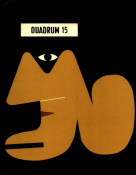 [COLLECTIVE]. Quadrum No. 15. Brussels, A.D.A.C., 1963. |
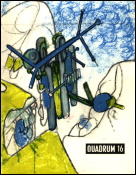 [COLLECTIVE]. Quadrum No. 16. Brussels, A.D.A.C., 1964. |
|
|||
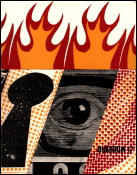 [COLLECTIVE]. Quadrum No. 17. Brussels, A.D.A.C., 1964. |
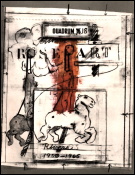 [COLLECTIVE]. Quadrum No. 18. Brussels, A.D.A.C., 1965. |
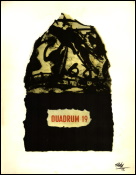 [COLLECTIVE]. Quadrum No. 19. Brussels, A.D.A.C., 1965. |
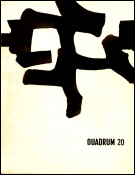 [COLLECTIVE]. Quadrum No. 20. Brussels, A.D.A.C., 1966. |
|
|||
“ QUADRUM was the organ of the reasonably adventurous art lover and the institutional representatives of what Arthur Danto, in a 1963 article, baptized the 'art world.' Especially in the early years, abstract art was the magazine's battle horse, and by that we must understand non-figurative art. In the beginning, it primarily sang the praises of lyrical abstraction, even though some first-hour protagonists, like Pierre Janlet, were more drawn to its geometric variant. It was a time of exacerbated power struggles between Paris and New York competing to set the tone, although the international success of Abstract Expressionism and, later, Pop art and Minimalism, allowed New York to establish itself as the center of contemporary art right from the inception of QUADRUM. The magazine's editors wished to see a revival of the interwar artistic avant-garde, which had been cast into oblivion during the hostilities and the preceding years of an unfavorable political climate. It is within this context that at least the initial phase of the magazine must be interpreted.” (Frederik Leen) |
|||

Rare books | Monographs | Collectives | Essays | Catalogues raisonnés | Exhibitions | Publications | Miscellaneous documents
information | purchases | contact
© 2025-2030 Frederic Dorbes - tobeArt Bookstore & Gallery
General terms and conditions of sale