 themes : GUTAI (Gutai bijutsu kyokai : 1954-1972) themes : GUTAI (Gutai bijutsu kyokai : 1954-1972)
|
 |
DOMOTO Hisao (Japan, Kyoto 1928 - Kyoto 2013)
HORIO Sadaharu (Japan, Kobe 1939 - Kobe 2018)
IMAÏ Norio (Japan, Osaka 1946)
KANAYAMA Akira (Japan, Osaka 1924 - Tokyo 2006)
MAEKAWA Tsuyoshi (Japan, Osaka 1936)
MASANOBU Masatoshi (Japan, Kochi 1911 - Hyogo 1995)
MATSUTANI Takesada (Japan, Osaka 1939)
MOTONAGA Sadamasa (Japan, Iga 1922 - Takarazuka 2011)
MURAKAMI Saburo (Japan, Kobe 1925 - Nishinomiya 1996) |
SHIMAMOTO Shozo (Japan, Osaka 1928 - Nishinomiya 2013)
SHIRAGA Fujiko (Japan, Amagasaki 1928 - Amagasaki 2015)
SHIRAGA Kazuo (Japan, Amagasaki 1924 - Amagasaki 2008)
SUMI Yasuo (Japan, Osaka 1925 - Itami 2015)
TANAKA Atsuko (Japan, Osaka 1932 - Nara 2005)
UEMAE Chiyu (Japan, Kyoto 1920 - 2018)
YOSHIDA Toshio (Japan, Tokyo 1928 - Osaka 1997)
YOSHIHARA Jiro (Japan, Osaka 1905 - Ashiya 1972)
YOSHIHARA Michio (Japan, Ashiya 1933 - Ashiya 1996)
|
|
| |
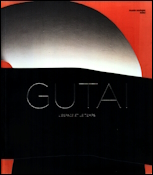
[GUTAÏ]
L'espace et le temps
Rodez, Musée Soulages, 2018. |
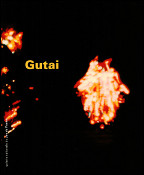
[GUTAÏ]
GUTAÏ
Paris, Galerie du Jeu de Paume, 1999. |
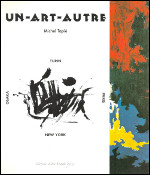
[COLLECTIF]
Tapié. Un-art-autre
Turin, Edizioni d'arte Fratelli Pozzo, 1997. |
|
|
| |
|
|
|
| |
|


The GUTAI movement (literally meaning “concrete”) was officially born in 1954 in Ashiya, near Osaka, under the impulse of Jiro YOSHIHARA, a tutelary figure who imposed a golden rule on his disciples: “Do not copy anyone, create what has never been done”. In 1956, YOSHIHARA published the Gutai Art Manifesto, a founding text that rejected academicism and the simulacrum of representation in order to advocate for a direct fusion between the human spirit and matter. Contrary to traditional art that enslaves the material to the artist's will, the group sought to reveal the inherent life of matter, whether it be paint, mud, water, or light, while asserting a radical creative freedom in a Japan undergoing full democratic reconstruction after the traumas of World War II.
The group's early years, between 1955 and 1956, were marked by revolutionary open-air exhibitions that prefigured international happenings and performance art. In July 1955, during the exhibition “Experimental Outdoor Exhibition of Modern Art to Challenge the Midsummer Sun”, and later in 1956 in Tokyo, GUTAI artists pushed the boundaries of the artistic medium: Saburo MURAKAMI lunged through kraft paper screens, Kazuo SHIRAGA wrestled body-to-body with earth in his performance Challenging Mud, and Atsuko TANAKA conceived her famous Electric Dress composed of flashing light bulbs. These actions, often ephemeral, aimed to turn the creative act into a visceral event where the artist's body became the primary instrument, transforming the gallery or stage space into a field of raw energetic forces.
From 1957 onwards, the movement's trajectory took a decisive turn following the meeting between Jiro YOSHIHARA and the French critic Michel Tapié, theorist of “Art Autre” (Art of Another Kind). This international connection integrated GUTAI into the broader movement of Lyrical Abstraction and global informal art, offering the group exceptional visibility in Europe and the United States. As early as 1958, the prestigious Martha Jackson Gallery in New York dedicated an exhibition to the movement, solidifying the links between the Japanese avant-garde and American Abstract Expressionism. Although this shift toward a more “portable” type of painting on canvas was sometimes criticized for dampening the most experimental aspect of their performances, it allowed the works of SHIRAGA, MOTONAGA, or SHIMAMOTO to enter major international collections.
The final phase of the movement was marked by an increasing integration of technology and a reflection on urban space, culminating during the Osaka World Expo in 1970, where the group animated the Festival Plaza with monumental installations. The death of Jiro YOSHIHARA in 1972 led to the official dissolution of the Gutai Art Association, after eighteen years of a longevity rare for an avant-garde movement. Rediscovered massively by Western institutions over the last two decades, notably during the retrospective at the Guggenheim Museum in New York in 2013, GUTAI is recognized today as one of the most innovative currents of the 20th century. It laid the groundwork for performance art, Body Art, and multimedia installation long before the emergence of similar movements in the West such as Fluxus or New York happenings.
Here is a selection of major historical exhibitions that jalonned, structured, and defined the history of the Gutai group from its creation to its international recognition:
- “Experimental Outdoor Exhibition of Modern Art to Challenge the Midsummer Sun” (July 1955 – Ashiya City Park) This was the very first collective public manifestation of the group. Refusing the white walls of traditional galleries, the artists took over a public pine grove day and night. The works became one with nature: structures suspended from trees, colored plastic sheets on the ground containing dyed water, and interactive sculptures. This was the starting point for environmental and immersive art.
- “1st Gutai Art Exhibition” (October 1955 – Ohara Hall, Tokyo)
This first indoor exhibition left a lasting impression through its radicalism and introduced the artist's body at the center of the work. It was here that Saburo MURAKAMI performed his famous action by successfully breaking through several stretched kraft paper screens (The Action of Breaking Through Paper), and that Kazuo SHIRAGA presented his first paintings executed solely with his feet, suspended from a rope above the canvas.
- “2nd Gutai Art Exhibition” (October 1956 – Ohara Hall, Tokyo)
Experimentation reached its peak. Atsuko TANAKA presented her monumental Electric Dress, a flashing armor made of hundreds of hand-painted colored light bulbs, a metaphor for Japan's rapid industrialization. Kazuo SHIRAGA also realized his historic performance Challenging Mud, where he wrestled physically in his underwear within a mound of mud, mortar, and cement, letting the material solidify under the imprint of his movements.
- “Gutai Art on the Stage” (May 1957 – Sankei Hall, Osaka / Tokyo)
The group transposed its plastic research and ephemeral performances into a real theater space. The artists conceived timed sequences blending light plays, appearances of mobile geometric shapes, projections, and physical interactions, thus setting the fundamental milestones of what would later be called happenings and stage performance.
- “International Art of a New Era: Informel and Gutai” (1958 – Takashimaya Department Store, Osaka)
Co-organized with French critic Michel Tapié, this exhibition confronted for the first time GUTAI's productions with those of European and American masters of informal art and Lyrical Abstraction (FONTANA, POLLOCK, DE KOONING, APPEL, MATHIEU). This event sealed the integration of the Japanese avant-garde into the global art network and initiated the group's transition toward more traditional and “exportable” canvas formats.
- “Gutai Exhibition” (September 1958 – Martha Jackson Gallery, New York)
This was GUTAI's first major exhibition abroad. Although American critics of the time missed the revolutionary nature of the performances (the physical works being perceived then as mere derivatives of abstract expressionism), this exhibition marked the official entry of SHIRAGA, MOTONAGA, and SHIMAMOTO into the Western art market.
- “Gutai Exhibition” (1965 – Galerie Stadler, Paris)
Thanks to the unwavering support of Michel Tapié, the European public discovered the group's works on a large scale in Paris. This exhibition consecrated the institutional recognition of the early members and durably established these artists' market value among international collectors.
- The Osaka World Expo (Expo '70) (1970 – Osaka)
This was the swan song and the most monumental project of the group. Invited to occupy the gigantic Festival Plaza (designed by Kenzo Tange), GUTAI imagined grand kinetic and technological installations, inflatable structures, and complex aerial choreographies. This event demonstrated the group's ability to link art, urban space, and the rising technological industry of modern Japan.
- “Homage to Gutai” (1976 – Hyogo Prefectural Museum of Modern Art, Japan)
This was the very first retrospective exhibition post-dissolution. It allowed for the gathering and documentation of works, photographs, and films of the ephemeral performances from the 1950s, saving a major part of the group's memory.
- “JAPON DES AVANT-GARDES 1910–1970” (1986 – Centre Pompidou, Paris)
This major global historical exhibition was a shock to the Western public and critics. The Centre Pompidou dedicated a central place to GUTAI's performances and installations. For the first time in Europe, it was realized that Saburo MURAKAMI, Kazuo SHIRAGA, and Atsuko TANAKA had invented happenings, body art, and multimedia installation well before American (like Fluxus) or European movements.
- “Gutai: Japanische Avantgarde 1954–1972” (1991 – Institute of Contemporary Art, Darmstadt, Germany)
A major traveling exhibition in Europe that precisely mapped out the technical and aesthetic contribution of each member of the group, from the first to the second generation.
- “Out of Actions: Between Performance and the Object, 1949–1979” (1998 – MOCA, Los Angeles)
This major international exhibition (which traveled to New York, Vienna, and Tokyo) definitively placed GUTAI at the summit of global performance history, alongside Jackson POLLOCK, Allan KAPROW, and Viennese Actionism.
- “GUTAI: SPLENDID PLAYGROUND” (2013 – Solomon R. Guggenheim Museum, New York)
This was the ultimate retrospective exhibition. The prestigious Guggenheim Museum honored the movement by transforming its famous helical ramp into a GUTAI playground. Atsuko TANAKA's Electric Dress and Kazuo SHIRAGA's foot-painted canvases were celebrated there as undeniable masterpieces of the 20th century.
- “Gutai” (2012 / 2013 – National Museum of Art, Osaka, Japan)
Organized for the 50th anniversary of the creation of the Gutai Pinacotheca, this double exhibition allowed for a re-evaluation of the movement's impact on current Japanese contemporary art.
- “Action, Gesture, Paint: Women in Abstraction 1940–1970” (2023 – Whitechapel Gallery, London)
This recent international exhibition shed particular light on the work of Atsuko TANAKA and Fujiko SHIRAGA, reminding that women played absolute pioneering roles within the Japanese avant-garde.