 themes : FUTURISM (1909-1916) - (1920-1930) themes : FUTURISM (1909-1916) - (1920-1930)
|
 |
BALLA Giacomo (Italy, Turin 1871 - Rome 1958)
BOCCIONI Umberto (Italy, Reggio Calabria 1882 - Verona 1916)
BRAGAGLIA Anton Giulio (Italy, Frosinone 1890 - Rome 1960)
CARLI Mario (Italy, San Severo 1888 - Rome 1935)
CARRÀ Carlo (Italy, Quargnento 1881 - Milan 1966)
CONTI Primo (Italy, Florence 1900 - Fiesole 1988)
CRALI Tullio (Montenegro, Igalo 1910 - Italy, Milan 2000)
DEPERO Fortunato (Italy, Fondo 1892 - Rovereto 1960)
DOTTORI Gerardo (Italy, Perugia 1884 - Perugia 1977)
|
FILLIA (Luigi Colombo) (Italy, Revello 1904 - Italy, Turin 1936)
MARINETTI Filippo Tommaso (Egypt, 1876 - Italy, 1944)
PRAMPOLINI Enrico (Italy, Modena 1894 - Rome 1956)
RUSSOLO Luigi (Italy, Portogruaro 1885 - Cerro di Laveno 1947)
SANT'ELIA Antonio (Italy, Como 1888 - Monfalcone 1916)
SEVERINI Gino (Italy, 1883 - France, 1966)
SOFFICI Ardengo (Italy, Rignano sull'Arno 1879 - Forte dei Marmi 1964)
THAYAHT (Ernesto Michahelles) (Italy, 1893-1959)
etc...
|
|
| |
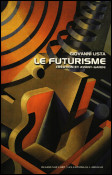
[FUTURISME]
Le Futurisme
Paris, Les Editions de l'Amateur, 2001. |

[COLLECTIF]
L'Art en mouvement
Paris, Fondation Maeght, 1992. |
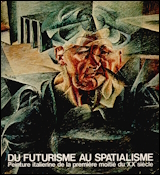
[FUTURISME - SPATIALISME]
Du Futurisme au Spatialisme
Milano, Electa Editrice, 1977. |

[FUTURISME]
Le Futurisme 1909-1916
Paris, RMN, 1973. |
|
| |
|
|
|
| |
|


The FUTURIST movement officially took shape on February 20, 1909, with the sensational publication of the Manifesto of Futurism on the front page of the French daily newspaper Le Figaro. Written by the Italian poet Filippo Tommaso MARINETTI, this foundational text laid the groundwork for a radical avant-garde born in Italy but designed to shake the whole of Europe. The following year, in 1910, major painters such as Umberto BOCCIONI, Giacomo BALLA, Carlo CARRÀ, and Gino SEVERINI signed the Manifesto of the Futurist Painters, transforming this literary impulse into a true artistic tidal wave, fully determined to extract Italian art from its passivity and its cult of museums.
At the heart of Futurist philosophy lay an absolute fascination with technical modernity, speed, machines, and the large industrial city. MARINETTI proclaimed that a racing automobile was more beautiful than the Victory of Samothrace. The Futurists violently rejected the past, academic tradition, and the cult of the antique to celebrate pure energy, movement, and technological progress. To spread their provocative ideas, the movement made massive use of mass media, flyers, and organized memorable theatrical evenings (the serate futuriste) that deliberately turned into riots and general brawls with the audience, making provocation an essential component of their artistic approach.
On the aesthetic and technical level, FUTURISM sought to visually translate the sensation of simultaneity and the dynamism of the modern world. In painting and sculpture, artists developed the concept of "force-lines" to fragment objects and fuse bodies with their moving environment. Umberto BOCCIONI thus created his famous 1913 sculpture Unique Forms of Continuity in Space, materializing a human body modified by speed. The movement quickly extended to poetry with the invention of "words-in-freedom" (which shattered traditional syntax), to the utopian architecture of Antonio SANT'ELIA in 1914, and to the experimental music of Luigi Russolo who, with his 1913 manifesto The Art of Noises, invented sound machines called Intonarumori.
The trajectory of FUTURISM shattered and was reshaped through the political upheavals of the First World War, a conflict that the artists had initially glorified as "the world's only hygiene." The death at the front of key figures like BOCCIONI and SANT'ELIA in 1916 brought a brutal halt to the first, so-called "heroic" Futurism. During the 1920s and 1930s, a "second Futurism" emerged under the leadership of artists like Fortunato DEPERO, turning toward aeropainting and applied arts, but the movement then compromised itself through its close and complex ties with Mussolini's fascist regime. Despite this dark ideological end of the road, the formal legacy of FUTURISM remains immense: its research into movement, sound, and performance deeply nourished Russian Constructivism, Dadaism, and paved the way for contemporary performances and electronic music.
To understand the impact and diffusion of FUTURISM across Europe and the world, several major exhibitions marked its history, from its initial provocations to its modern retrospectives:
- Exhibition of Italian Futurist Painters (February 1912 – Bernheim-Jeune Gallery, Paris)
This is the most important historical exhibition of the movement. For the first time, BOCCIONI, CARRÀ, RUSSOLO, and SEVERINI confronted their paintings with the Parisian public, then the art capital of the world. The event caused a resounding scandal, sparked intense debates with the Cubists, and marked the beginning of a triumphal tour that exported Futurism to London, Berlin, Brussels, and Rotterdam, spreading the shockwave throughout Europe.
- The First Free Futurist Exhibition (April-May 1914 – Sprovieri Gallery, Rome)
This Roman exhibition was crucial as it opened the movement's doors to international artists and multidisciplinarity. It gathered not only the painters of the early days but also integrated the architectural models of Antonio SANT'ELIA and the research of Russian artists (such as Alexander ARCHIPENKO). It was the pinnacle of "heroic" FUTURISM just before the outbreak of the war.
- Exhibition of Futurist Aeropainting (1931 – Camerata degli Artisti, Rome)
This official exhibition laid the milestones for the "second Futurism" of the 1930s. Led by MARINETTI and new artists like PRAMPOLINI or DOTTORI, it sanctified Aeropainting, a pictorial style that sought to translate the sensations of speed, flight, and aerial perspectives born from the development of modern aviation, while sealing the movement's ideological alignment with the Italian State of the time.
- « Futurism and Italian Modernism » (1973 – Musée d'Art Moderne de la Ville de Paris)
This major post-war retrospective played a key historical role in the critical reassessment of the movement in France. It allowed for the rediscovery of the artistic power and theoretical coherence of FUTURISM, separating the analysis of its artistic innovations from the political controversies that had overshadowed the end of its path.
- « Italian Futurism, 1909–1944: Reconstructing the Universe » (2014 – Solomon R. Guggenheim Museum, New York)
This monumental exhibition remains the largest overview ever produced in the United States on the subject. It marked recent history by embracing the movement in its chronological and multidisciplinary totality, displaying more than 300 works (painting, sculpture, design, architecture, photography) and demonstrating the far-reaching influence of FUTURISM on all the visual arts of the 20th century.